Proof — not for distribution

Are you 18 or older?

Sascha Bardeaux is an adult performer. Everything past this point is intended for adults.

No — take me away

Answering yes stores a record on this device so you are not asked again. Nothing is transmitted and no account is created.

No. 01

Unbound proof

Sascha Bardeaux

Standfirst copy sits here at the length it will actually run — two lines wide, three narrow — so the composition is measured against real rhythm rather than a short stand-in.

Note: Provisional copy — awaiting the client

Find her Destination pending
  • The interview she has not given before
  • Rules of engagement, in her words
  • Centrefold — full registration

Magenta laid · yellow, cyan, key still open

Contents

  1. 04 From the editor Who she is, in her own words
  2. 09 Correspondence Letters, and one that goes unfinished
  3. 16 The interview Rules of engagement
  4. 24 The slow hand A defence of the unhurried evening
  5. 32 Centrefold Full registration
  6. 40 The sitting Twelve frames, one afternoon
  7. 48 Party jokes Drawn for this magazine
  8. 54 The back pages Where to find her
  9. 62 Colophon Masthead and legal

Note: Folios provisional — awaiting the client

From the editor

We had a different cover planned. It was perfectly good. It would have sold about as well as the last one, which is to say adequately, and not one person in this office would have been able to describe it to you by March.

Then somebody laid Sascha Bardeaux’s frames out on the light table, and the room went quiet in the particular way a room goes quiet when everybody has independently decided not to be the first one to say something. Our art director has been looking at photographs professionally since Eisenhower. He said one word. It is not a word we are permitted to print in the front of the book, and we have printed a great deal in the front of the book.

What follows is the whole issue. We did not pad it and we did not hurry it, and we would take it as a personal favour if you did not hurry it either.

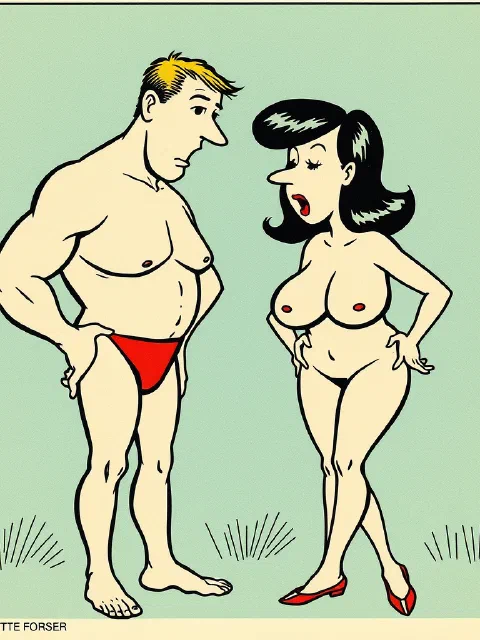
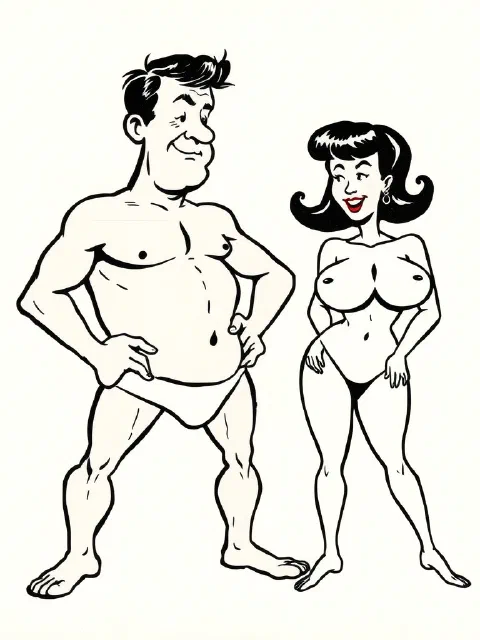
Cartoon: two figures standing, one appraising the other.
“Don’t sell yourself short, Harold. You have a wonderful personality.”

Correspondence

Letters to the editor. We print them as they arrive, which is to say badly spelled and worse punctuated, and we do not correct the arithmetic.

“I have never written to a magazine before.”

That is how these begin, so let me begin properly. I have never written to a magazine before, and I would not be writing now except that my wife left the last issue open on the kitchen table, face down, at the page with Sascha on it. She did not say anything about it. Neither did I. It stayed there four days.

On the fifth I came home and it was gone, and she was reading it in bed with the light on, and she looked at me over the top of it the way she has not looked at me since 1961.

I am not writing to complain.

R. T., Cleveland

“She reads these, doesn’t she.”

My question is procedural. My friend Dennis insists the letters in this magazine are composed by a man in an office in Chicago who has never met any of you. I told him that if that is true, then the man in Chicago knows things about me I have not told my priest.

Settle it. There is money on it.

D. W., Buffalo

“The second time was better.”

The first time I found her photograph I did what any man would do and I am not going to sit here and pretend otherwise. The second time I took my time about it. I put a record on. I turned the lamp down. I found the page again and I did not hurry, and I want to report that the difference was not small.

Everything I have ever done quickly I have done badly.

Initials withheld, Portland

“My wife wants me to tell you what she said.”

The magazine lives in the drawer on her side now, which should tell you who is really buying it. Thursday she opened it flat on the pillow beside my head and told me exactly what she wanted while I looked at the page. She used words I did not know she owned. She did not stop talking until she was finished, and neither did I.

Afterward she said: write and tell them it works.

So. It works.

Mr. and Mrs. H., Sacramento

“I have started this six times.”

Every version begins by telling you what I did with your photograph, because that is what the other men write and I assumed that was the form.

But that is not what I want to tell you.

What I want to tell you is that somewhere in the fourth version I stopped looking at the picture and started waiting for it to look back. That is a different thing. I do not think it is a thing a page can do.

I do not know how to finish this letter. I am not certain it is the kind that

Unsigned. No address. Received without a stamp.

The editor replies

We print that one unfinished because it is the only honest letter in the column.

The other four men wrote to a photograph, and the photograph did what photographs do, which is nothing at all. The fifth worked out the problem. A page cannot look back at you. It has never once been able to, and that is not a failure of the printing — we have checked the printing.

She is not on this page. She was never on this page. What is on this page is ink, arranged carefully enough to remind you of her, and you have now spent long enough with the ink to know the difference.

The rest of it is not our department. It is hers.

Find her Destination pending
Cartoon: two figures in conversation, one still partly dressed.
“Relax — I’m not taking mine off until I know you’re serious.”

Six questions, put badly, answered better

The interview

We sent our man with a list and instructions to stick to it. He did not stick to it. What survives is printed below.

Let’s dispose of the tedious one first. What do people get wrong about you before you have said a word?
Answer held pending transcript.
You have said you can tell inside thirty seconds. Tell us what you are actually reading in those thirty seconds.
Answer held pending transcript.
What is the difference between a man who is nervous and a man who is careless?
Answer held pending transcript.
Is there a compliment that works?
Answer held pending transcript.
What loses your attention permanently?
Answer held pending transcript.
Last one, and answer it however you like. What should someone do the moment they close this page?
Answer held pending transcript.

Note: Answers held — to be set from tape, in her voice, not ours

A considered essay

The slow hand

In which we argue, against the whole momentum of the age, that the best thing a man can bring to a woman is an unhurried evening.

There is a particular kind of man who treats desire the way he treats a motorway: as an obstacle between himself and an arrival. He has somewhere to be. He has always had somewhere to be. He will get there, and he will tell you he got there, and it will not once occur to him that the getting was the entire point.

We would like to make the case for the other man. He is rarer. He is not in a hurry, and the reason he is not in a hurry is not patience — patience is endurance, and endurance is joyless. He is not in a hurry because he has worked out that the good part is long, and that shortening it is a form of vandalism.

Consider what he actually does. He does not begin where the other man begins. He begins three hours earlier, in a conversation about something else entirely, and he is genuinely interested in the something else. He notices what she orders. He notices what she says about her sister. He is not banking this information for later use; he is simply awake, and being awake in the company of a woman is so uncommon that it registers as a kind of touch.

By the time his hand arrives anywhere, it has been expected for some while. That is the whole trick, and it is not a trick. Anticipation is not the queue before the event. Anticipation is the event, and the rest is the receipt.

The hurried man will object that this is a great deal of ceremony around a simple appetite. He is right that the appetite is simple. So is hunger, and no one has yet argued that this makes a good dinner indistinguishable from eating standing up over the sink. The simplicity of the want has never had any bearing on the quality of the satisfying.

We are aware of the counter-argument, which is that all this restraint is merely a longer route to the same destination, and that a man who takes four hours has simply wasted three. To which we say: ask her. We have never met a woman who complained that a man took too long over her. We have met a great many with the other complaint, and they were not shy about it, and several of them have written to this magazine.

There is a version of this argument that ends in a lecture about restraint, and we are not making it. Restraint implies a man straining against a leash he has fastened himself, and there is nothing appealing about a straining man. The slow hand is not restrained. It is unhurried, which is the opposite: it is the hand of someone who is not worried the evening will be taken away from him.

That confidence is the thing being read, incidentally. Not the technique. Nobody has ever been undone by technique. What undoes a person is the sense that the man across from them has cancelled everything else and is not checking a watch, and that this could go on for as long as it goes on, and that no part of it is a formality on the way to something better.

There is nothing better. That was always the misunderstanding.
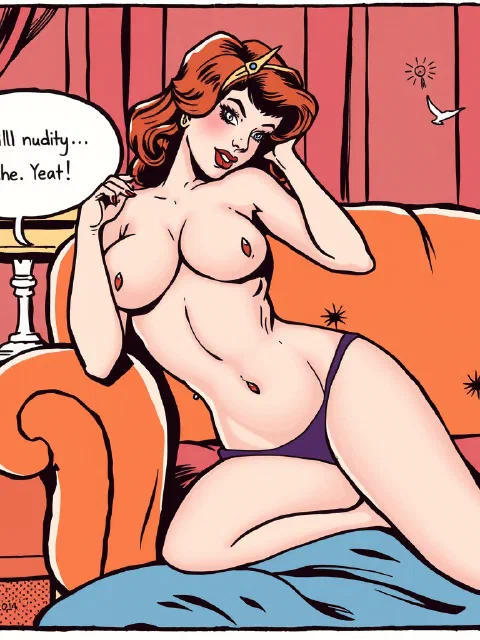
Cartoon: a woman reclining, addressing someone off-frame.
“I told the editor I’d pose down to my principles.”
Note: Artwork commission outstanding

Centrefold

Caption copy runs here, at the length a real caption runs.

Photography pending — art-direction brief owed to the client

Drawn for this magazine

Party jokes

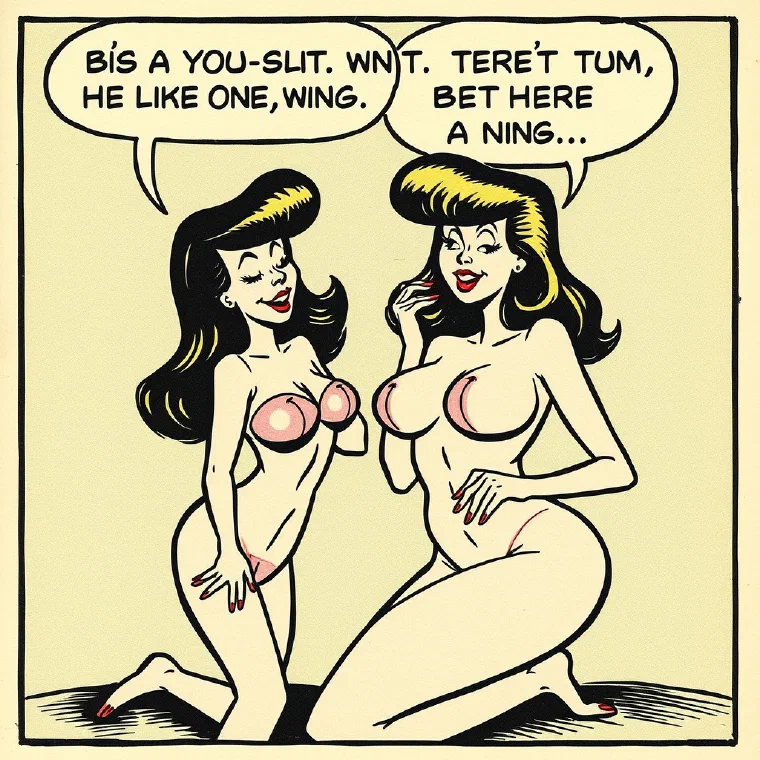
Cartoon: two figures kneeling in conversation.
“The photographer said these were temporary.” — “Sweetie, so is the photographer.”
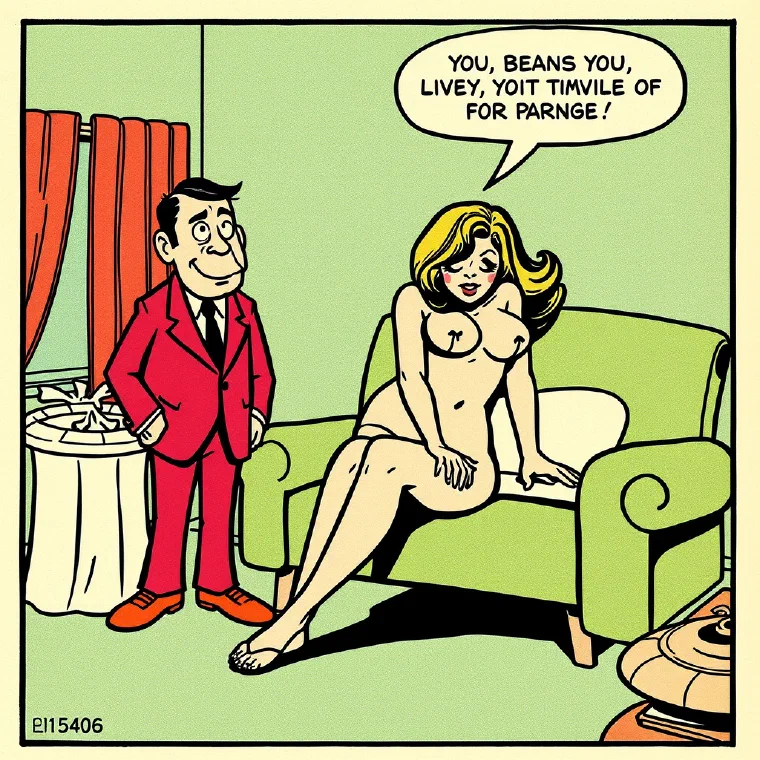
Cartoon: a man in a suit standing beside a woman on a chair.
“Do keep the suit on, Walter. One of us should look employed.”
Cartoon: a woman on a sofa beside a mirror.
“Of course I still respect you, Arthur. I just can’t remember which one you are.”
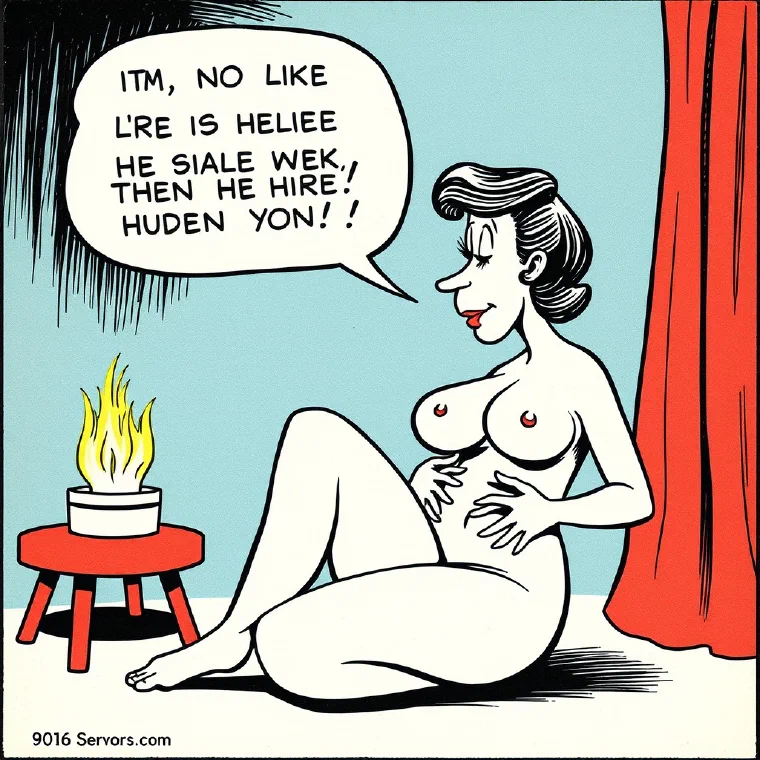
Cartoon: a woman seated on the floor beside a lit brazier.
“It’s not that I’m cold, darling. It’s that you’re taking so long.”
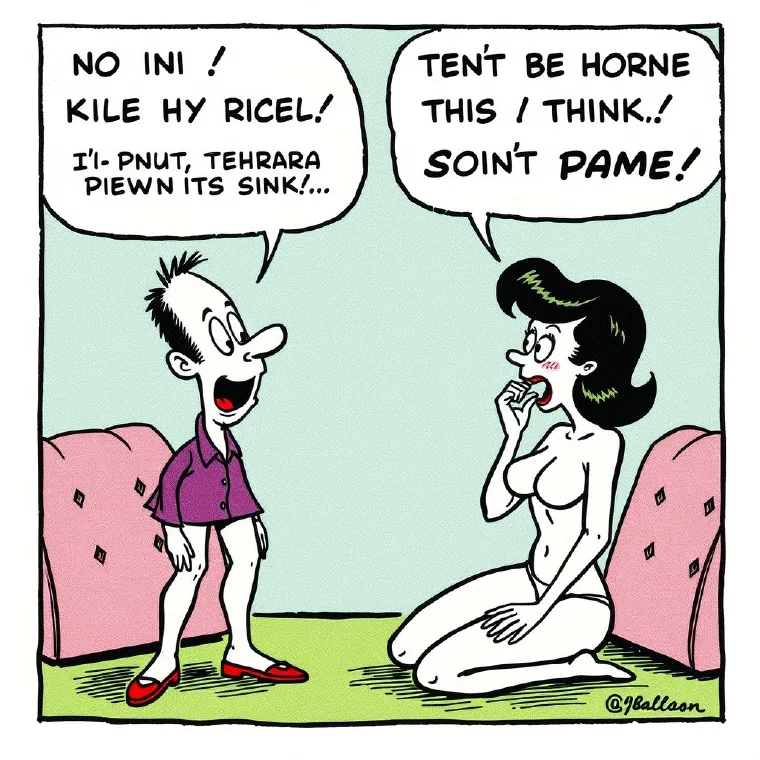
Cartoon: a startled man and a kneeling woman.
“The landlord’s on the stairs!” — “Then he can wait his turn.”

Note: Lettering pass outstanding — balloons to be re-set by hand

The back pages

Colophon

Title
Sascha Bardeaux
Issue
No. 01
Set in
Archivo
Enquiries
Address pending